

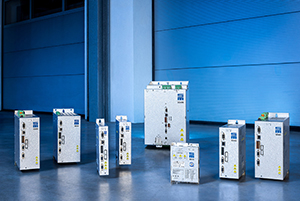
A consistent theme emerging from discussions at Advanced Engineering was that increasing machine speed is rarely as simple as turning up a setpoint.  While higher RPMs promise gains in throughput and surface finish, engineers know that thermal behaviour, vibration, tooling strategy, and control capability quickly become limiting factors. Unlocking genuine productivity improvements requires a system-level view of the machine, not just faster components.
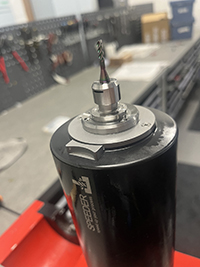
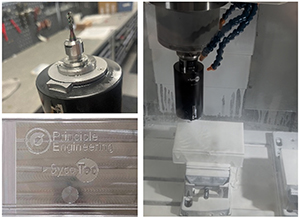 A recent project supported by Principle Engineering illustrates this well. A machine shop on the south coast introduced a 60,000rpm SPEEDER unit to increase cutting speed. In theory, this six-fold increase should have reduced a 6-hour 30-minute process to under two hours. Initial results delivered a meaningful 50% reduction, bringing cycle time down to three hours. Further investigation revealed the next bottleneck: tool path strategy. By re-optimising the tool path to take full advantage of the available speed, the process moved closer to a four-times improvement in throughput. The project highlighted a common reality in high-speed applications – gains come not from a single change, but from understanding how each part of the system interacts.
 At the heart of many high-speed machines sits the frequency converter. More than a power source, modern high-performance converters, such as the latest SD4 range from Sieb & Meyer, provide the intelligence needed to run efficiently at elevated speeds. Advanced communication and diagnostic capabilities allow engineers to monitor system health, identify emerging issues, and make incremental improvements that protect uptime and extend equipment life. When combined with appropriately specified high-speed motors or spindles, precision bearings, and robust feedback devices, the result is a machine capable of sustained, reliable high-speed operation.
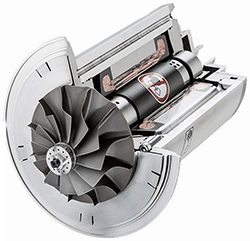 Principle Engineering regularly supports both new designs and retrofit projects across sectors including machine tools, turbo blowers, pumps, compressors, atomisers, and energy generation and storage systems. One area that continues to inspire discussion and draw on their extensive bearing expertise is gas turbine technology, increasingly relevant not only in energy applications but also in advanced propulsion systems for small aircraft. These machines bring together extreme rotational speeds, demanding thermal conditions, and micron-level tolerances. Achieving reliable performance requires careful integration of motors, bearings, and control electronics, often through multiple design iterations.
For engineers tasked with improving productivity or modernising existing equipment, the key takeaway from Advanced Engineering is clear: speed alone is not the solution. Performance comes from selecting and integrating the right technologies, supported by diagnostic insight and application expertise. Principle Engineering works with customers to address these challenges holistically, helping them realise practical, reliable gains rather than theoretical ones.
To find out more about Principle Engineering’s approach to high-speed system integration, visit: https://principle-eng.co.uk